Willow Bank, Dawn Wind, Fading Moon
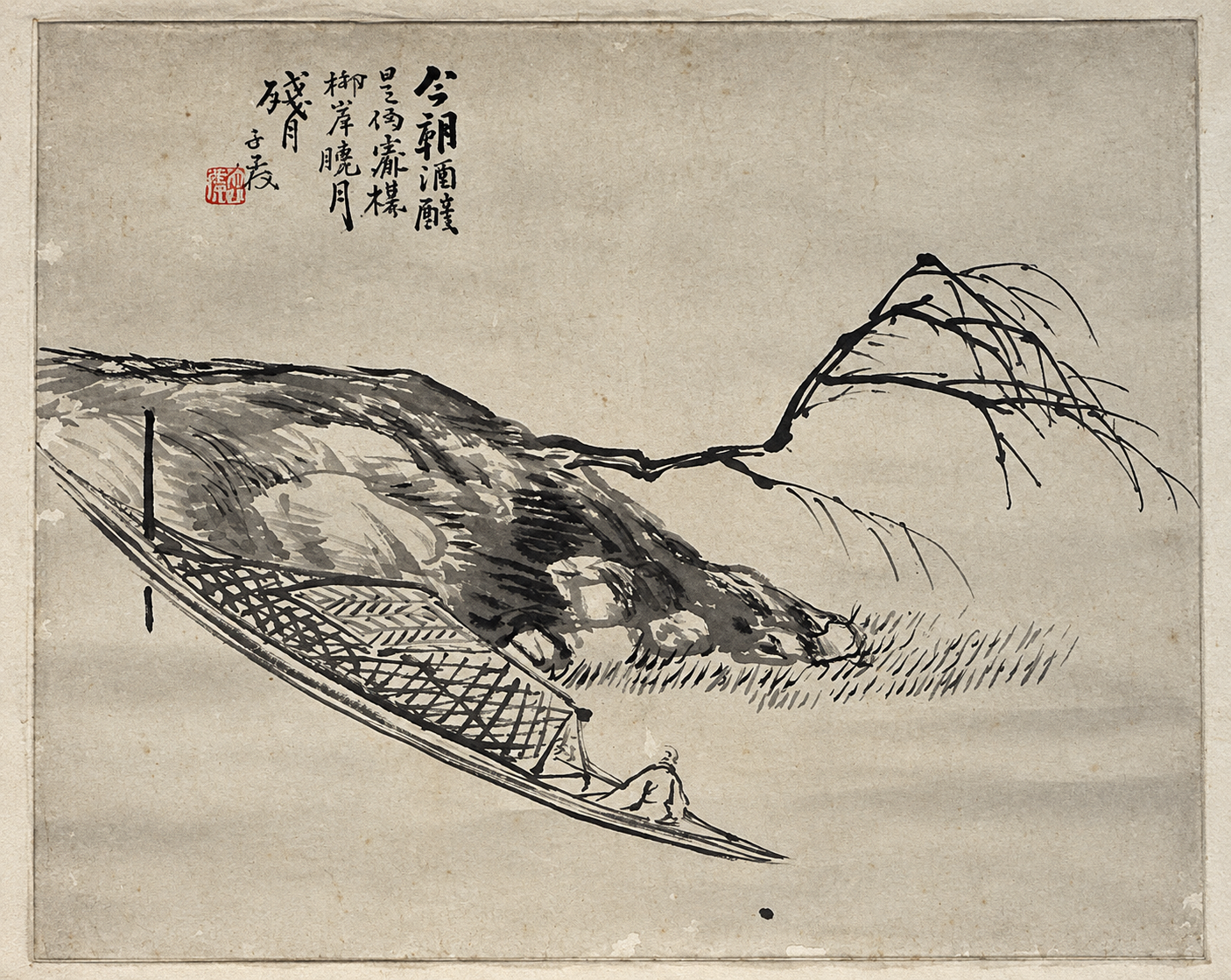
I saw this painting in a room at Lingyin Temple in Hangzhou. Its inscription quotes one of the most famous passages in Chinese poetry, by Liu Yong (柳永, Northern Song dynasty):
今宵酒醒何处?
杨柳岸,晓风残月。
A translation:
Where shall I find myself when the wine wears off tonight?
On a willow-lined bank—
dawn wind, a fading moon.
These lines are from 《雨霖铃·寒蝉凄切》 (Yǔ lín líng, usually translated Bells Ringing in the Rain), a ci lyric about parting. The scene begins earlier: an autumn rain has just stopped; two lovers say goodbye outside the city; the boatman urges departure. The speaker imagines the long journey ahead, across mist-covered waters.
Immediately before the lines on the painting, Liu Yong writes:
多情自古伤离别,更那堪冷落清秋节。
Since ancient times, those who love have suffered at parting—
how much harder to bear in the desolation of autumn.
And immediately afterward:
此去经年,应是良辰好景虚设。
便纵有千种风情,更与何人说?
For years after this departure, even lovely hours and beautiful scenes will seem wasted.
And even if I have a thousand tender feelings, to whom could I tell them?
The striking thing is how the answer to “Where?” consists almost entirely of images: willow bank, dawn wind, fading moon. There is no need to name the loneliness. The scene says it. In Chinese poetry, willow branches also evoke farewell, making the bank itself part of the separation.
The painting’s artist has not been securely identified; the photograph is from the temple, not an attribution of the work to Liu Yong.
Source for the Chinese text: 《雨霖铃·寒蝉凄切》.